

El Chaltén sits on an edge: the lenga forest ends and the steppe begins, and the plants change within a few kilometres. On a single hike you go from a shade orchid in the forest to a spiny orange-flowered shrub on a wind-scoured hill. This guide lists only species recorded around town, with the month and the trail to see them.
What flowers each month
| Month | In flower | Where to look |
|---|---|---|
| October | Calafate, mata guanaco, huilmo | Hills and steppe by town, Mirador de los Cóndores |
| November | Anemone, palomita orchid, Chloraea alpina, campanita, first notros | Forest on the Fitz Roy trail, start of the Laguna Torre trail |
| December | Notro at its best, topa topa, Darwin’s slipper, porcelain and yellow orchids, waterfall flower | Every trail; the road to Lago del Desierto |
| January | Darwin’s slipper, porcelain orchid, mata negra, topa topa, sea pink | Open slopes on the Laguna Torre and Pliegue Tumbado trails, Río Blanco |
Flowering months from iNaturalist observations tagged "flowering" in the area. A cold year shifts it by a week or two.
Trees and shrubs in flower
- Notro or ciruelillo · Embothrium coccineum
- The red you see from a distance. A shrub or small tree with clusters of fire-red tubular flowers, sometimes so laden you can’t see the leaves. It flowers from November to January, peaking in December. Look on the road to Lago del Desierto, in the Río Blanco forest, in the Torre valley and on the edges of town. In English: Chilean firebush.
- Calafate · Berberis microphylla
- The spiny shrub that gave El Calafate its name. In October and November it fills with tiny yellow flowers hanging like little bells. In summer it bears a dark blue berry that the town turns into jam and ice cream. The saying goes that whoever eats calafate comes back. It grows everywhere around town.
- Mata guanaco · Anarthrophyllum desideratum
- A low, spiny cushion shrub that in October and November is covered in orange and red pea flowers. A steppe plant: you will see it on the dry slopes of the Los Cóndores and Las Águilas viewpoints, not in the forest.
- Mata negra · Chiliotrichum diffusum
- A shrub with narrow dark leaves and white flowers like small daisies. It flowers in December and January along forest edges, at the Río Blanco and on the road to Lago del Desierto.

The orchids
Yes, there are orchids in El Chaltén, and they are not rare. They grow in the ground, they are small and you have to crouch to see them. They flower from November to January.
- Porcelain orchid · Chloraea magellanica
- The showiest. White flowers with a net of green veins, like painted porcelain. It flowers in December and January in grassland and clearings: around town, by Mirador de los Cóndores and at the start of the Fitz Roy trail.
- Palomita · Codonorchis lessonii
- A single small white flower on a stem with two or three leaves in a ring. It likes the shade of the lenga forest. November and December, on the Fitz Roy trail, the Río Blanco and the forest at Lago del Desierto.
- Yellow orchid · Gavilea lutea
- Several yellow flowers on a spike. December and January, in forest clearings on the Fitz Roy trail and on the road to Lago del Desierto.
- Chloraea alpina
- Smaller, with greenish-yellow veined flowers. One of the earliest in November, on the open slopes at the start of the Laguna Torre and Pliegue Tumbado trails.
Flowers of the steppe and the rocks
- Darwin’s slipper · Calceolaria uniflora
- The flower that gets the most photographs. An orange and yellow slipper two or three centimetres long, with a white band in front. Darwin collected it in Patagonia and one of its scientific names, C. darwinii, comes from him. Steppe birds eat the white part and pollinate the flower as they do. It grows flat to the ground on loose stone: on the open slopes of the Laguna Torre and Pliegue Tumbado trails and near Mirador de los Cóndores. November to January. In Spanish, zapatito de la Virgen.
- Topa topa · Calceolaria biflora
- The slipper’s cousin: two or more yellow pouches on a long stem, with the leaves in a rosette. December and January, in grassland on every trail.
- Anemone · Anemone multifida
- The flower most seen around town. Creamy white petals, sometimes yellowish or pink on the outside, and finely cut leaves. November and December, at the start of the Laguna Torre trail, on the hills by town and on the Fitz Roy trail.
- Waterfall flower · Ourisia ruellioides
- Red tubular flowers on wet rock beside water. December and January, on the Huemul Glacier trail and by the streams of the Torre valley.
- Huilmo and campanita · Olsynium junceum and O. biflorum
- Two small relatives of the iris. Huilmo has lilac or white flowers in October and November on the steppe by town; campanita, white veined bells in November and December.
- Sea pink · Armeria curvifolia
- Pink pompoms on thin stems, in dry stony places, from November to January. You see it from town up to the Río Blanco.
Where to see the most flowers in one walk
- Los Cóndores and Las Águilas viewpoints
- October and November: calafate and mata guanaco in flower on the steppe, with Fitz Roy opposite. 6.2 km with a guide, 2 to 3 hours.
- Start of the Laguna Torre trail
- The open slopes of the first kilometres are the best place for Darwin’s slipper, anemones and Chloraea alpina.
- Fitz Roy trail to Capri
- Forest and clearings: palomitas, the yellow orchid, porcelain orchids in the grassland and notros at the edges.
- Loma del Pliegue Tumbado
- The climb goes through forest, grassland and loose stone: the trail with the most changes in flora in a single day.
- The road to Lago del Desierto
- The biggest notros, orchids in the forest and the waterfall flower on the Huemul Glacier trail.

Photographing flowers with Fitz Roy behind
- Get low
- To have the flower and the mountain in one frame, put the camera at flower height with a wide angle a few centimetres away. Fitz Roy comes out small but unmistakable, and the flower leads.
- Notro against granite
- The notros on the Fitz Roy trail and at the Río Blanco have the massif behind them. A short telephoto, 70 to 135 mm, pulls the two together and the red stands out against the grey.
- The wind
- The problem with every flower photo in Patagonia. Go early, when the air is still, use 1/500 or faster, and shield the flower with your body.
- No trampling
- Take the photo from the trail. If the flower is far, use the telephoto: one step off the path flattens ten others you didn’t see.
National Park rules
Nearly all these trails are inside Los Glaciares National Park, and the National Parks law does not allow you to take plants, flowers or seeds. No bulbs or cuttings as souvenirs either, and the rangers do check. Beyond the law, these plants grow little and slowly: a slipper pulled up does not come back, and the orchids depend on soil fungi that do not survive in a pot. Look, photograph, and leave it there for the next person. Read more →
Guided hikes in flower season
Our hikes start in October. The guides know where every patch of slippers grows and on which bend the palomitas flower, and they stop. To see the most species in a day, Laguna Torre (US$203) and Loma del Pliegue Tumbado (US$225). For an easy morning, the Mirador de las Águilas (US$100). In December, the road to Lago del Desierto belongs to the notros.
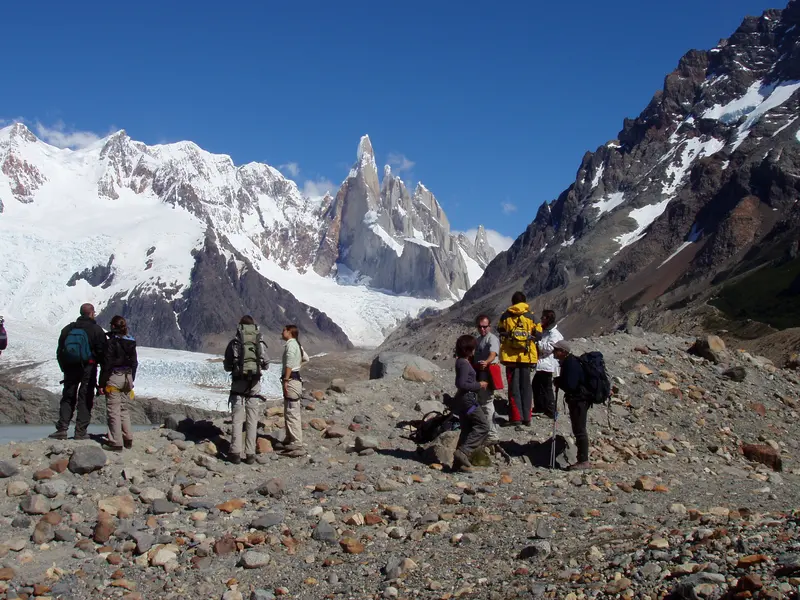 Laguna Torre16.6 km · +500 m · 7 to 8 h · from USD 203
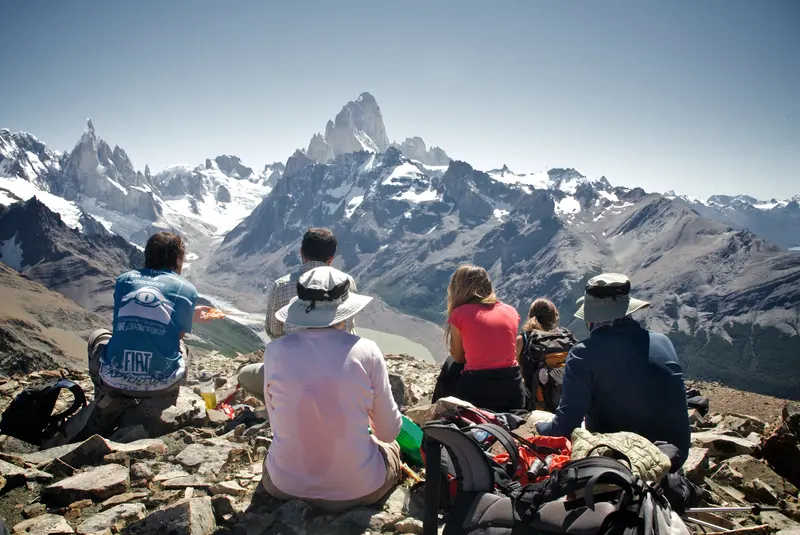 Loma del Pliegue Tumbado16.6 km · +1,040 m · 8 to 9 h · from USD 225
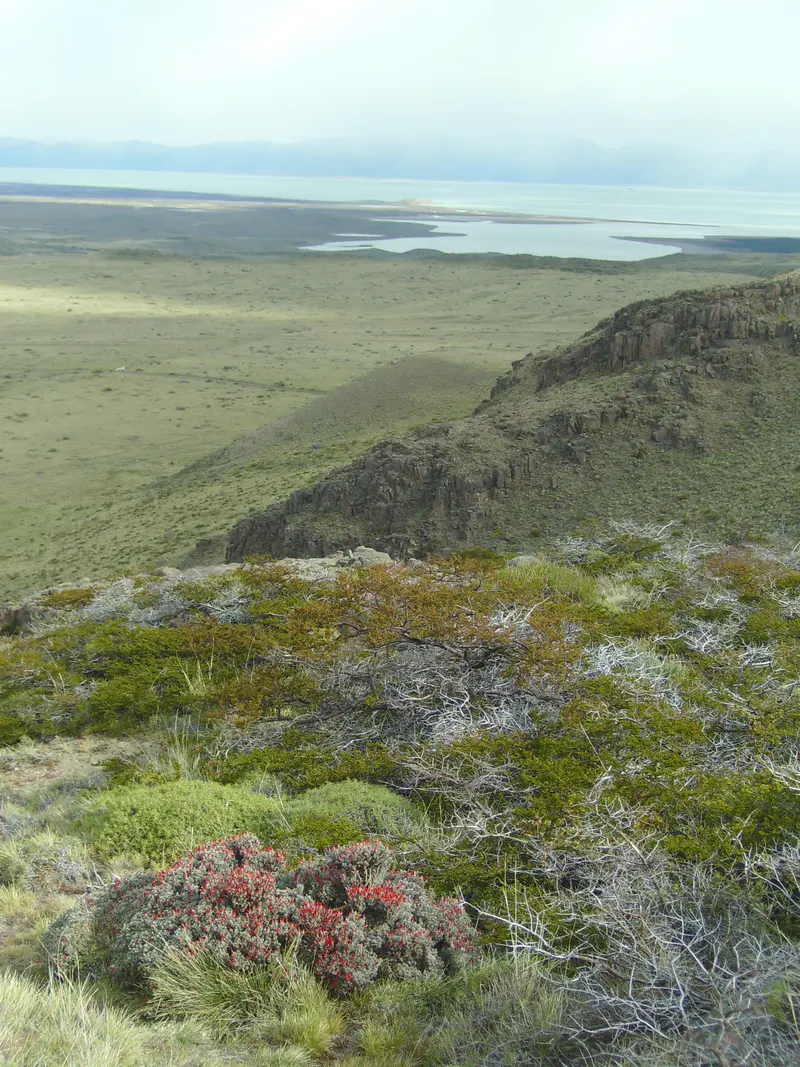 Mirador de las Águilas6.2 km · +150 m · 2 to 3 h · from USD 100
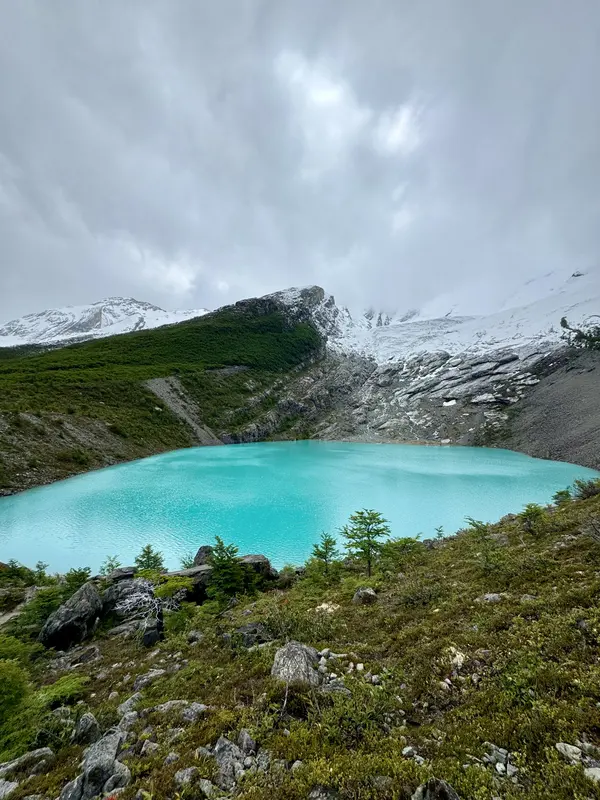 Lago del Desierto and Huemul Glacier3.4 km · +230 m · 6 to 8 h
With hotel and transfer from El Calafate, Fitz Roy and Cerro Torre is four days from US$1,390 per person. November and the first half of December are mid season, and October is low.
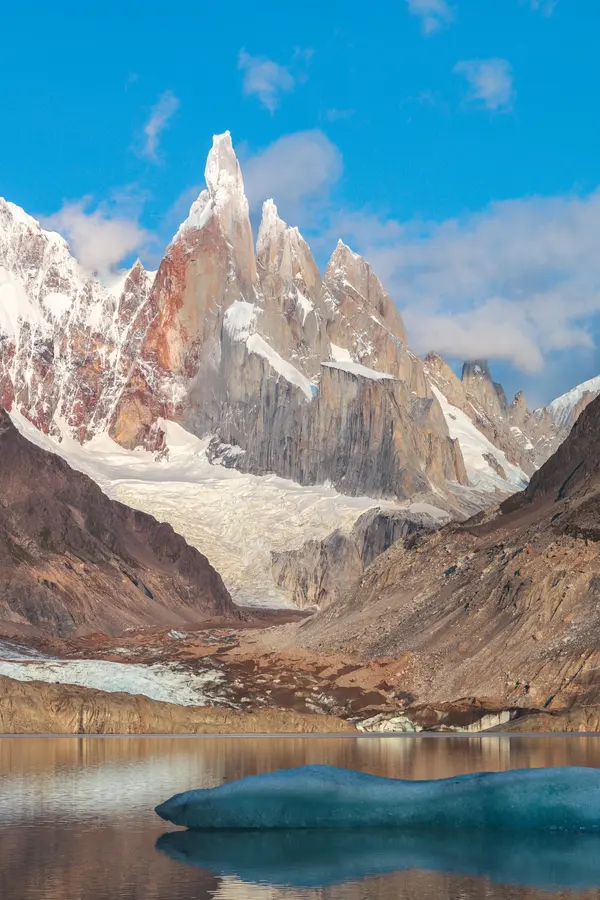 Fitz Roy and Cerro Torre4 days · from USD 1,390
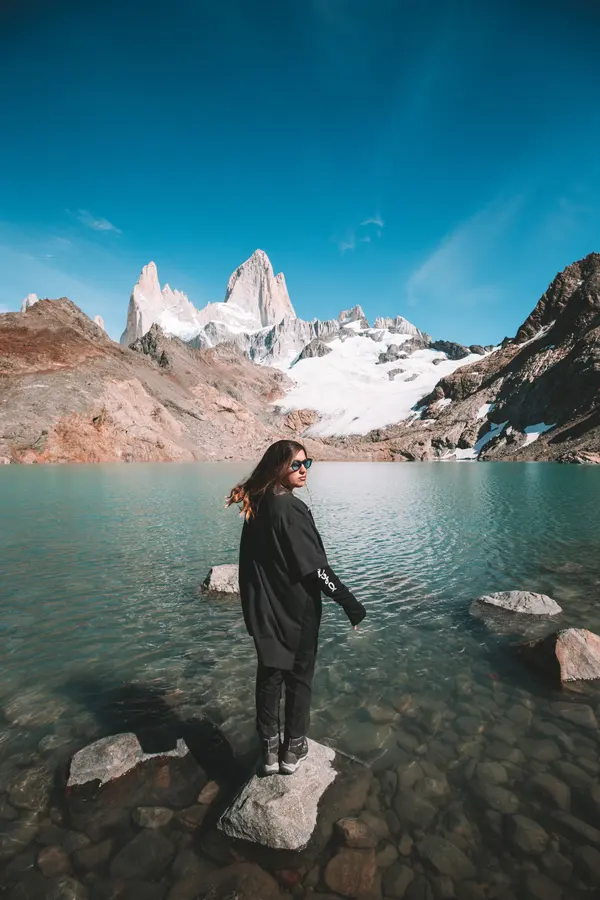 Fitz Roy, Cerro Torre and Viedma Glacier5 days · from USD 1,790
 Perito Moreno and Fitz Roy8 days · from USD 2,890
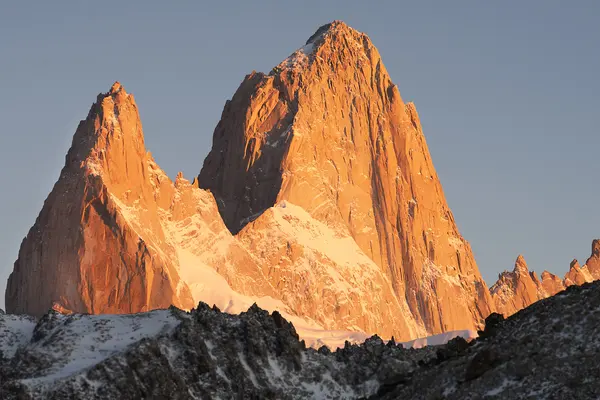 Sunrise on Fitz Roy5 days · from USD 2,290
Spring is also the windiest time. Before you come, see what each month is like. See →
Autumn in El Chaltén: when the lenga forests turn red, and where to walk. Read more →
Winter on snowshoes: cold, daylight and where you can walk. Read more →
Questions
When do wildflowers bloom in El Chaltén?
October to January. October is the month of calafate and mata guanaco; November of anemones and palomitas; December is the richest month, with the notro at its best; in January the slipper and the orchids carry on.
Are there orchids in El Chaltén?
Yes, several, all small and growing in the ground: the porcelain orchid (Chloraea magellanica), the palomita (Codonorchis lessonii), the yellow orchid (Gavilea lutea) and Chloraea alpina. They flower from November to January.
Where can I see Darwin’s slipper?
On loose stony ground and open slopes: the start of the Laguna Torre trail, Loma del Pliegue Tumbado and near Mirador de los Cóndores. November to January.
What is the red flowering shrub on the trails?
Nearly always the notro or Chilean firebush (Embothrium coccineum), a shrub or small tree with red tubular flowers. It flowers from November to January, peaking in December.
When does calafate flower?
In October and November, with small yellow flowers. The blue berry ripens in summer.
Can I pick flowers or collect seeds?
No. Nearly all the trails are inside Los Glaciares National Park, where taking plants, flowers or seeds is not allowed.
What is the best month to photograph flowers with Fitz Roy?
December, when the notro, the orchids and the slipper flower at the same time. It is also a windy month: go early, when the air is still.
Do I need a guide to see the flowers?
No, you see them from the trails. With a guide it is easier to find the small ones, like the orchids and the slipper, because guides know where they come up each year.
Are there flowers in autumn?
Few. In March and April what changes colour is the lenga and ñire forest, and the shrubs fill with berries.