

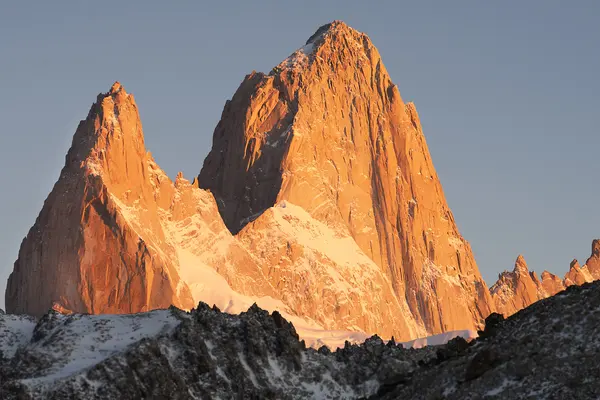
In April the mornings bring frost on the grass, the Río de las Vueltas runs quieter, and the slopes that were dark green all summer light up patch by patch. First a yellow, then an orange, and on the most exposed hillsides a red that looks painted on. Above it all, Fitz Roy and Cerro Torre with the first snow of the year.
When the lenga forests change colour
The change starts in mid-March, and the strongest colour usually falls between late March and the third week of April. There is no fixed date: it depends on the first frosts, on how much rain the summer brought and on altitude. As a rule the lengas higher up, near the tree line, turn first, and the valley floor follows. Some years, around town, red leaves hang on into the first days of May.
iNaturalist records of "coloured leaves" around town run from 3 March to 7 May, nearly all between mid-March and mid-April. If you have to pick a single week, the first week of April is the safest bet.
| What you see | Sunrise / sunset | |
|---|---|---|
| 1 March | Green forest, a few yellow ñires at the edges | 7:22 / 20:47 |
| 15 March | The higher lengas start to turn | 7:45 / 20:18 |
| 1 April | Yellow and orange slopes, reds on the hillsides | 8:11 / 19:41 |
| 15 April | Deepest reds on the valley floor, snow above | 8:31 / 19:12 |
| 30 April | Branches going bare, last patches near town | 8:53 / 18:44 |
What you see is a typical year, not a promise. Times worked out for the town (49.3° S), Argentine time (UTC−3).
Why these forests turn red
Almost all the forest around El Chaltén is made of two trees of the same genus, Nothofagus, the southern beeches. The lenga (Nothofagus pumilio) is the tall tree of the trails: it grows from the valley floor to about 1,000 metres, where the wind leaves it stunted and twisted. The ñire (Nothofagus antarctica) is its lower cousin, often a shrub, and it holds the edges of the bogs, the dry hillsides and the slopes facing the steppe.
Both drop their leaves in winter, which is rare in the southern Andes. As the days shorten the leaf stops making chlorophyll, the yellows and oranges underneath show through, and sunny days with cold nights add reds. That is why a dry, sunny autumn gives stronger reds than a cloudy one.
- How to tell a lenga
- A small oval leaf with rounded teeth in pairs between each vein. A straight-trunked tree in the forest, a creeping one up high. In autumn it goes from yellow to deep red.
- How to tell a ñire
- A smaller leaf with a wavy, irregular edge and a resinous smell when you rub it. Lower, often a thicket. It tends to give the oranges and reds at the edges of the bogs and on the slopes near town.

Where autumn looks best
- Fitz Roy trail and Laguna Capri
- The first kilometre climbs through lenga and ñire above the Río de las Vueltas valley, which you see whole from the viewpoint, every shade at once. Laguna Capri is ringed by lengas, and on still mornings Fitz Roy and the forest are mirrored in the water.
- Río Blanco and Poincenot
- Past the lake the trail crosses bogs with ñire and reaches the Río Blanco forest at the foot of the massif. This is where the contrast between red leaves and granite is strongest.
- Laguna Torre valley
- The trail runs along the side of the Río Fitz Roy valley, with lengas above and below. From the Cerro Torre viewpoint you see the valley end to end, all yellow and orange, with the Torre at the back.
- Loma del Pliegue Tumbado
- The view from above: the Torre valley forest like a carpet, the massif opposite and Lago Viedma behind. This is the place to grasp how much forest there is.
- The road to Lago del Desierto
- The 37 km of route 41 follow the Río de las Vueltas through lenga and ñire. We stop at the Chorrillo del Salto waterfall, and the Huemul Glacier trail climbs through forest to a lake with the ice above it.
- Los Cóndores and Las Águilas viewpoints
- A few minutes from the bus terminal. From the top you see the town, the ñires on the hills and the valley running up to Fitz Roy. The choice for a grey day or for the last light.
The short walk to the viewpoints and the one to Laguna Capri can be done on your own from town. Read more →

The light in March and April
In December the sun rises at 5:40, and to see Fitz Roy light up at Laguna de los Tres you walk from midnight. In April it rises between 8:10 and 8:50: the night start is still a night start, but far kinder. March has 12.4 hours of daylight and April 10.6, against almost 16 in January. Plenty for any day hike.
What changes most is the angle. In mid-April the sun climbs no higher than about 31 degrees, with solar noon near 13:50. The light stays low and warm all day, the shadows run long and you can shoot the forest backlit from mid-morning. In the evening the sun drops behind the massif early: the valleys go into shade while the summits stay lit for a long while.
Weather, wind and the first snow
Autumn is calmer, not drier. In the last ten years of records for the town, January has about 10 days a month with gusts over 60 km/h; March has 8 and April 6. There are whole calm weeks, with lakes flat as mirrors. But in the same series March is the wettest month of the year and April comes next: expect rain on some days, and snow up high.
Temperatures drop quickly: in March the average high is 13° and the low 6°; in April, 10° and 3°. The first snowfalls on the summits usually come in April, and some mornings the red forest wakes up under fresh snow. Our hikes go ahead in rain and in wind; what helps is a spare day for the clear morning. Read more →
Fewer people on the trails
After summer the town shifts down a gear. At Laguna Capri there is room to sit, at the Torre viewpoint you wait for the light without elbows, and restaurants have tables. The exception is Easter week, when many Argentines travel: if you can, avoid those days or book early. Towards the end of April some businesses start closing for winter, and the Poincenot and Thorwood camps are taken down on 20 April.
How to photograph autumn here
- Cloudy days for the forest
- Under an overcast sky the colours come out richer and without harsh shadows. Keep the grey day for the Río Blanco forest or the road to Lago del Desierto.
- Backlight
- With April’s low sun, a backlit lenga looks lit from inside. Look for it from mid-morning, with a lens hood on.
- Polariser
- It takes the shine off wet leaves and separates red from green. Watch the sky with a wide angle: it darkens it unevenly.
- Reflections
- Laguna Capri and Laguna de los Tres in the first hours, before the air gets up. Autumn has more still mornings than summer.
- First snow
- If it snowed overnight, go early: snow on red leaves lasts until the sun reaches it.
For sunrise at Laguna de los Tres there is the guided pre-dawn hike (US$295), and in April the walk in the dark is shorter than in high summer.
What to wear in autumn
- Layers
- A thermal base layer, a fleece or synthetic mid-layer and a light down jacket for the stops. Mornings can be zero degrees and at midday, in the sun and out of the wind, you walk in a T-shirt.
- Proper waterproofs
- A waterproof jacket and trousers. It rains in autumn, and what chills you is wind on wet clothes.
- Hat and gloves
- A thin pair to walk in and a warmer one for waiting for the light up top.
- Footwear
- Broken-in hiking boots that cope with mud. On the Laguna de los Tres moraine and on Loma del Pliegue Tumbado there may be snow or ice after a snowfall.
- Poles
- A great help on descents with mud and wet leaves.
- Headlamp
- With shorter days you sometimes walk back in low light, and the sunrise hike starts in the dark.
The full packing list, the one our guides use. Read more →
Guided hikes in autumn
Our season runs to the end of April and every day hike keeps going. Laguna de los Tres (19.6 km, US$228) is the long day to the foot of Fitz Roy, by way of Capri and the Río Blanco. Laguna Torre (16.6 km, US$203) runs up the yellowest valley. Loma del Pliegue Tumbado (16.6 km and 1,040 m of ascent, US$225) is the view from above. For shorter days, the Piedras Blancas Glacier (US$180) and the Mirador de las Águilas (US$100).
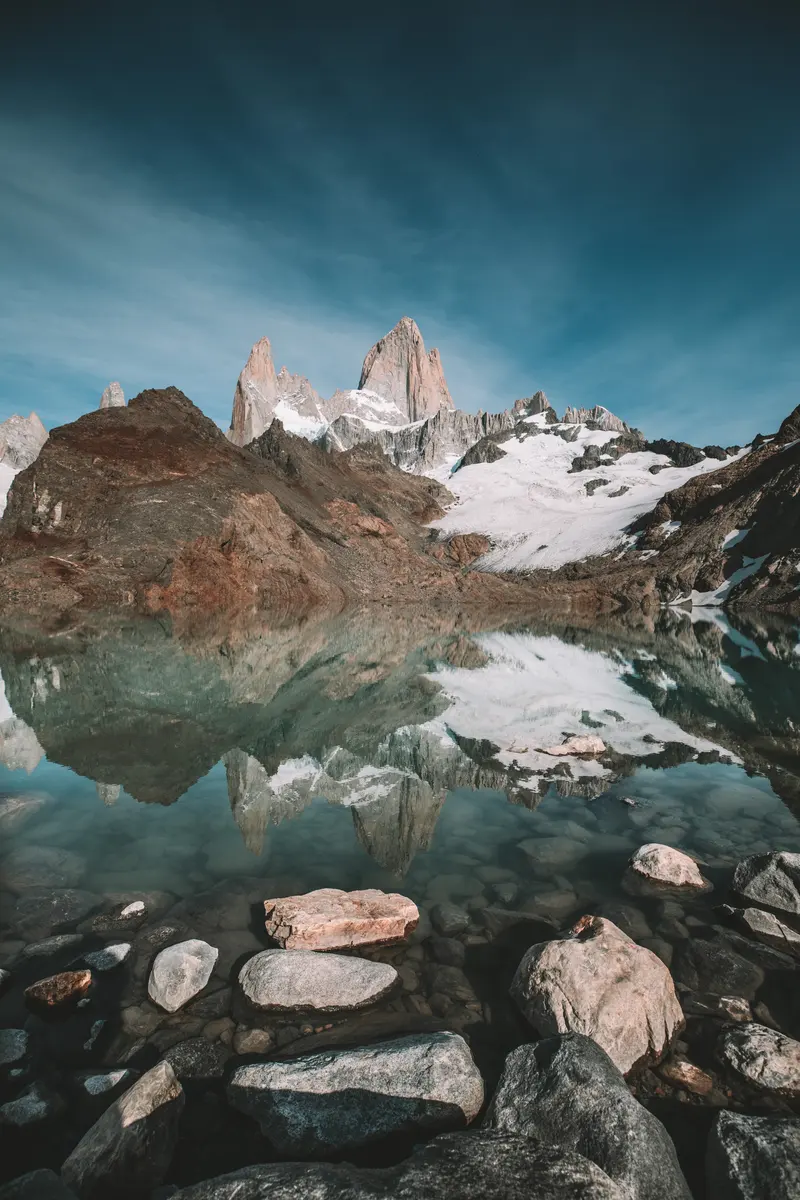 Laguna de los Tres19.6 km · +890 m · 8 to 10 h · from USD 228
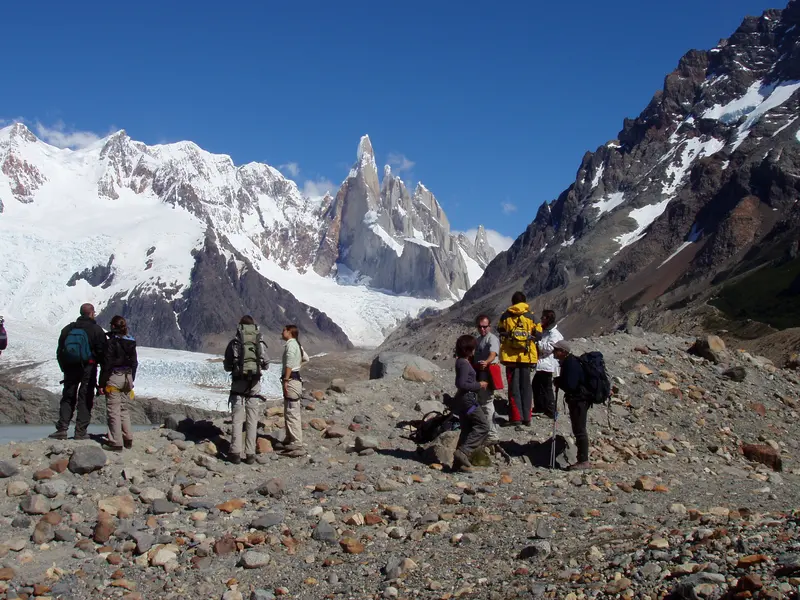 Laguna Torre16.6 km · +500 m · 7 to 8 h · from USD 203
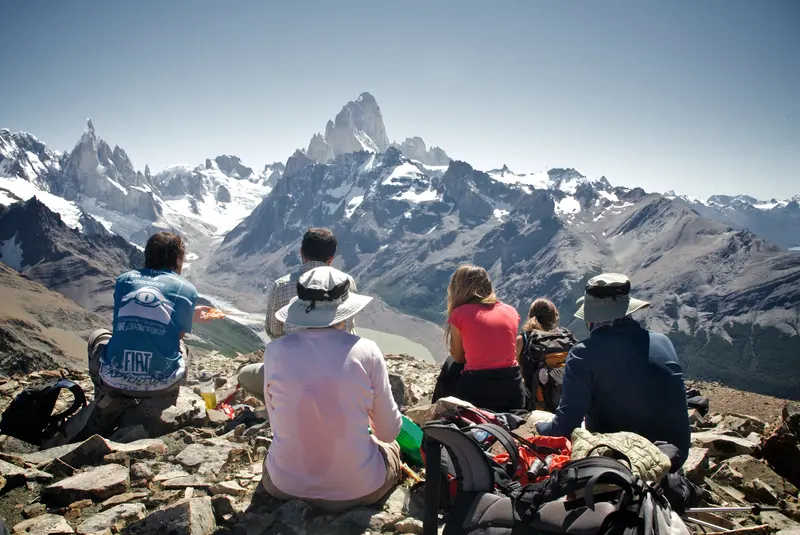 Loma del Pliegue Tumbado16.6 km · +1,040 m · 8 to 9 h · from USD 225
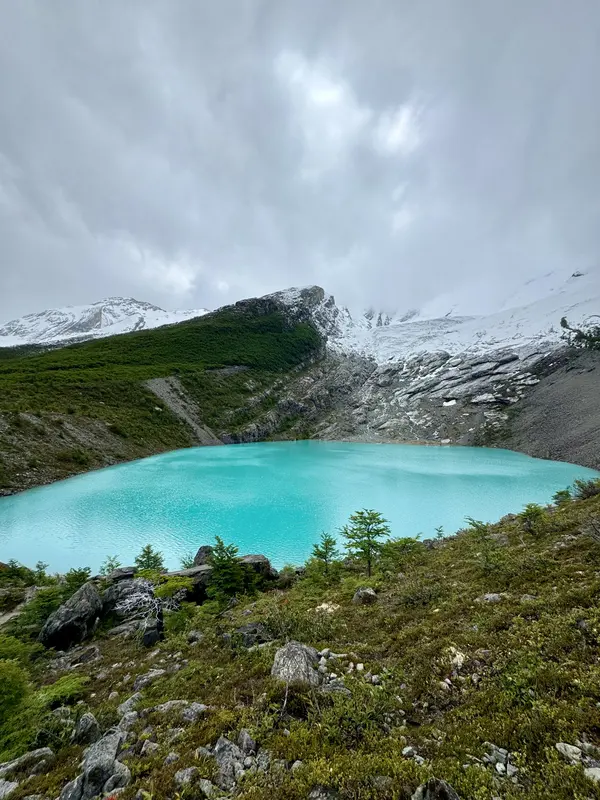 Lago del Desierto and Huemul Glacier3.4 km · +230 m · 6 to 8 h
Packages with hotel in autumn
April is low season: the packages carry their lowest price of the year. The shortest, Fitz Roy and Cerro Torre, is four days from El Calafate with transfer, hotel and the two classic hikes, from US$1,390 per person. Sunrise on Fitz Roy is private, with a guide just for you, the sunrise at Laguna de los Tres and Lago del Desierto, from US$2,290. March is mid season.
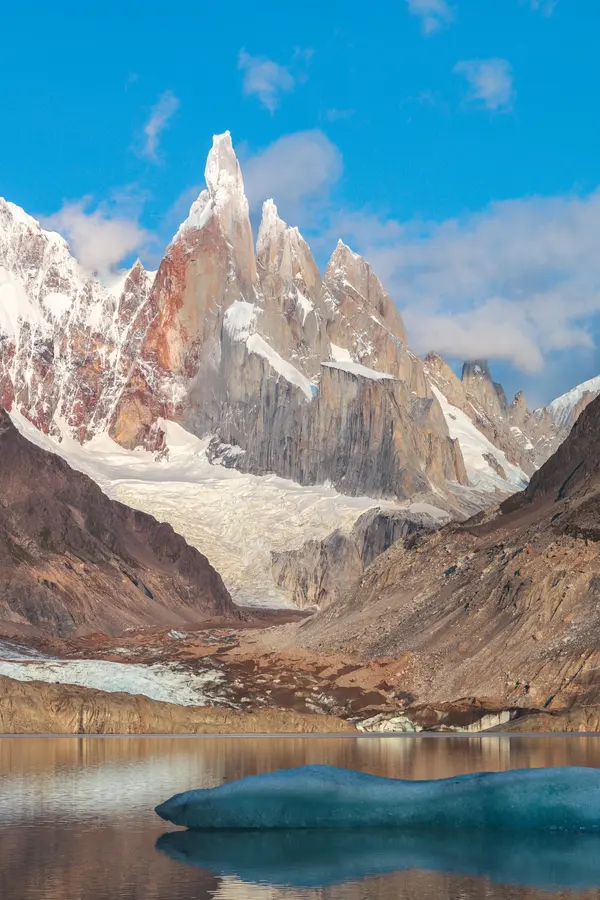 Fitz Roy and Cerro Torre4 days · from USD 1,390
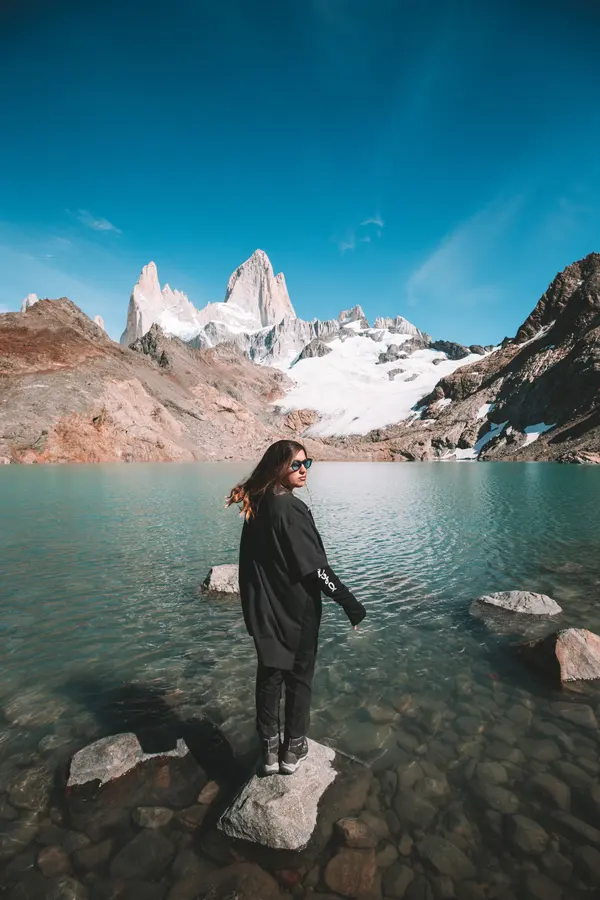 Fitz Roy, Cerro Torre and Viedma Glacier5 days · from USD 1,790
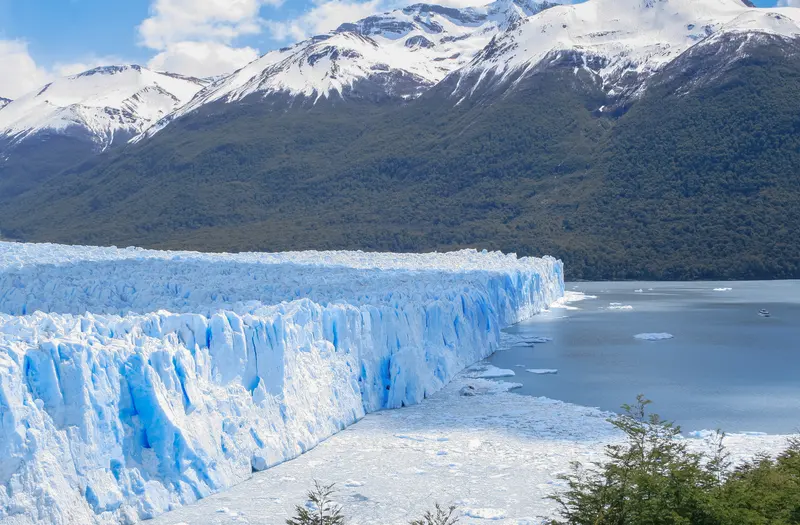 Perito Moreno and Fitz Roy8 days · from USD 2,890
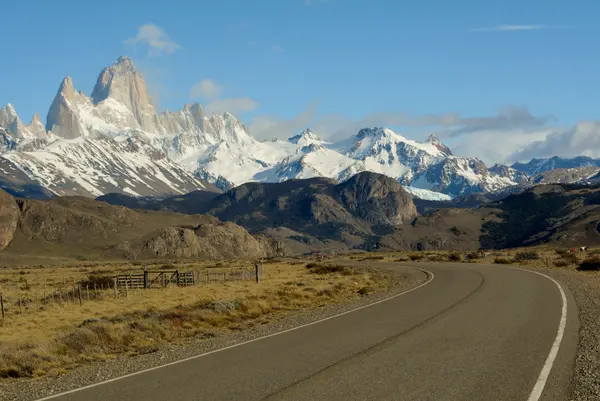 Sunrise on Fitz Roy5 days · from USD 2,290
Coming in April? See the weather month by month and what changes in winter. See →
Spring wildflowers in El Chaltén: what flowers, when, and on which trail. Read more →
Winter on snowshoes: cold, daylight and where you can walk. Read more →
Questions
When is autumn in El Chaltén?
March, April and May, as everywhere in the southern hemisphere. For the colours, mid-March to the end of April.
When do the lenga trees turn red?
The strongest colour usually falls between late March and the third week of April. It starts in mid-March with the higher lengas, and some years red leaves last into early May. It varies every year.
Which trees change colour in El Chaltén?
Lenga (Nothofagus pumilio) and ñire (Nothofagus antarctica), two southern beeches that drop their leaves in winter. They make up nearly all the forest around town.
Where are the best autumn colours?
On the Fitz Roy trail up to Laguna Capri and the Río Blanco, in the Laguna Torre valley, from Loma del Pliegue Tumbado and along the road to Lago del Desierto.
Is it less windy in autumn?
Yes. January has about 10 days a month with gusts over 60 km/h and April about 6. But it rains as much as in summer or more: bring waterproofs.
How cold is El Chaltén in April?
The average high is 10° and the low 3°. Mornings can be at freezing and it can snow up high.
Do guided hikes still run in April?
Yes. Our season runs to the end of April. The Poincenot and Thorwood camps stay up until 20 April.
Are hikes cancelled for rain or wind?
No. We walk in rain and in wind; only very heavy snow near winter moves a hike to the next day. A spare day helps you pick the clear morning.
What time is sunrise in April?
Between 8:10 early in the month and 8:50 at the end, Argentine time. Sunset is between 19:40 and 18:45.
Is autumn cheaper?
April is low season for our packages, with the lowest price of the year. March is mid season.